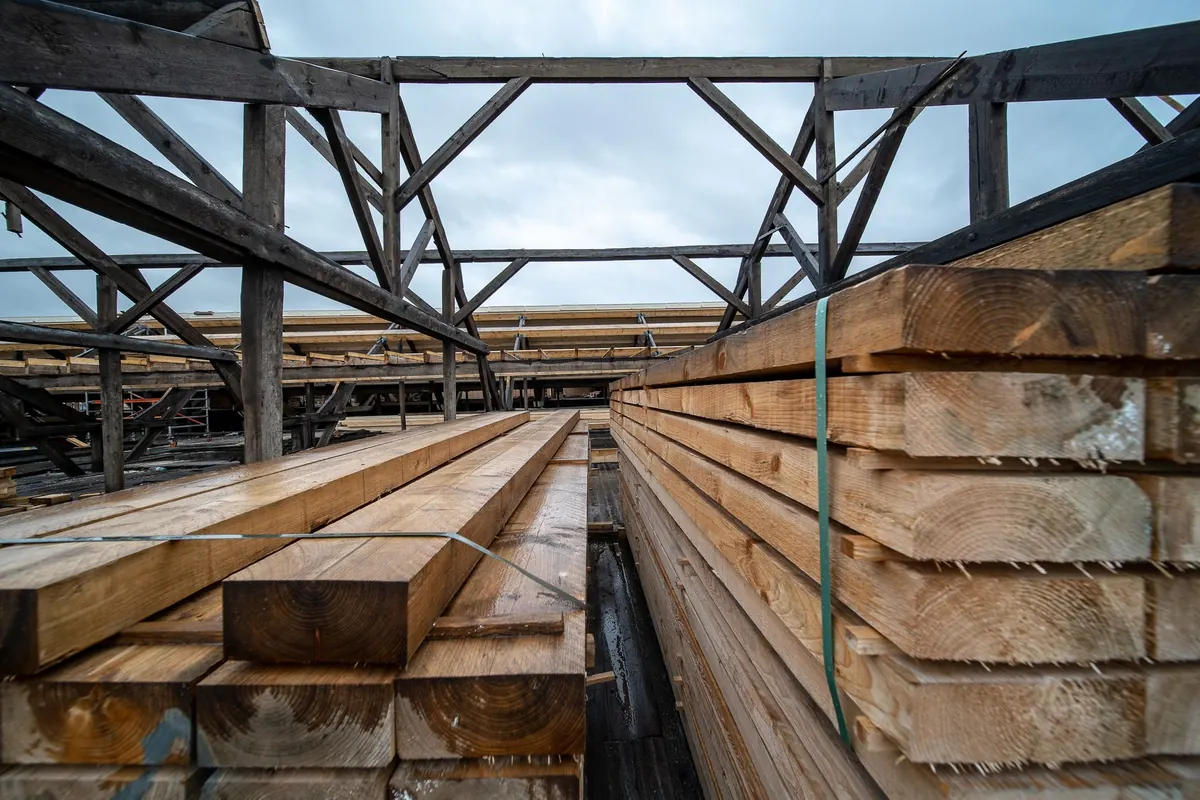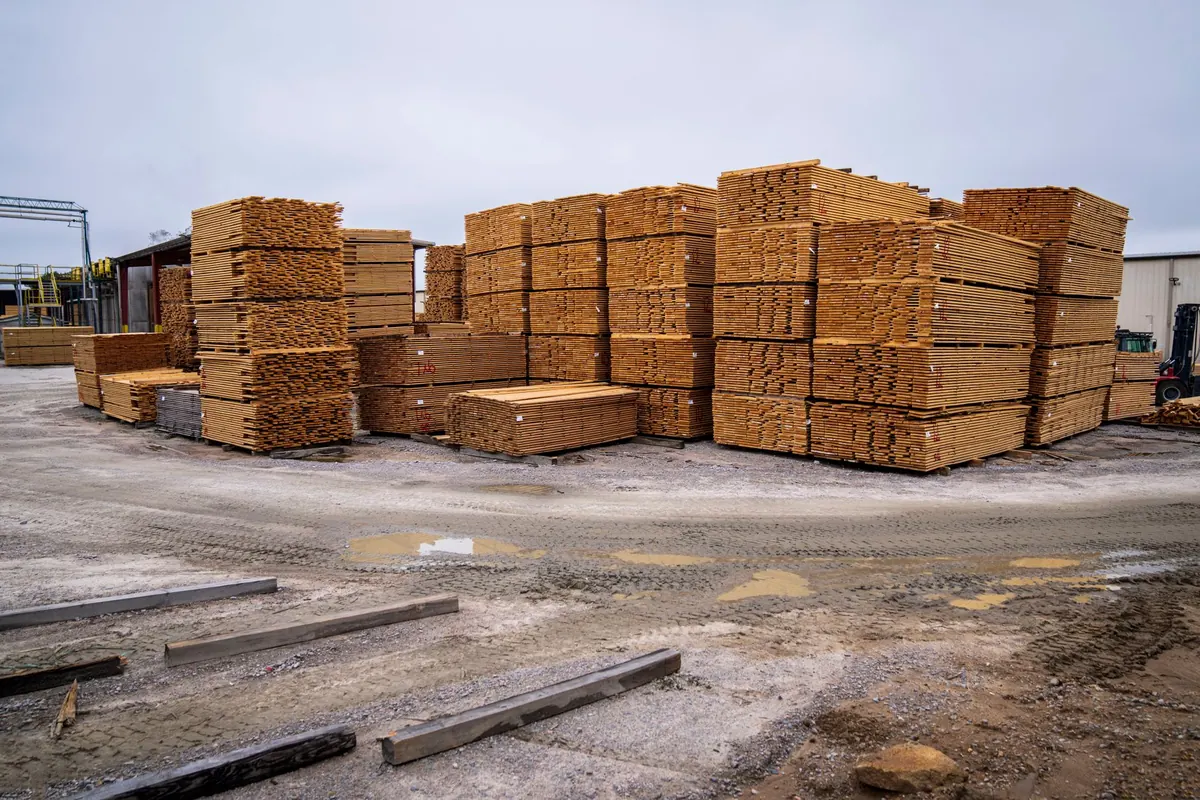
Larch is one of the most useful softwoods for British conditions. It takes paint and stain well, has good natural durability in the heartwood, and looks handsome on cladding, fencing, decking and structural work. But the word “larch” on a delivery note tells you only the species. The grade, moisture content and actual condition of the boards decide whether the timber is right for the job. Here is what those grading terms mean in practice, and what to check before you accept a load.
What a larch grade actually describes
A grade is a shorthand for appearance, strength and permitted defects. It is not a measure of how “good” the timber is in the abstract. A high-grade board for a visible cladding face may be a poor choice for a structural beam, and a structural grade may look rough but perform perfectly.
Two families of grading matter most. Structural grades are about load-bearing capacity. You may see visual grades such as C16 or C24, or machine-graded marks. These tell you the timber has been assessed for strength, stiffness and permissible defects. Appearance grades are about how the board looks. Merchants use terms such as A grade, B grade, character grade, rustic or select. These are not fixed across the industry. One supplier’s A grade may be another’s B. Always ask for the supplier’s written definition.
Larch also has a split personality: durable heartwood and less durable sapwood. For external work, the proportion of heartwood matters as much as the knot count. A board with a wide sapwood edge will weather and decay faster than a mostly heartwood board.
Common larch defects and what they mean
Defects are not automatically a reason to reject a delivery. Many are normal and acceptable in the right grade. The question is whether they affect the job you have in mind.
- Dead knots: loose or cracked knots that may fall out. Fine in some rustic cladding, risky where strength or weathertightness matters.
- Live knots: tight knots that are still fixed to the surrounding wood. Usually acceptable in appearance grades, though large clusters can weaken a board.
- Checks and splits: cracks along the grain. Small surface checks are common as timber dries. Deep splits or splits running through the end grain are more serious.
- Shakes: separation between growth rings, often visible on the end grain. They can reduce strength and allow water in.
- Wane: bark or a rounded, missing edge. It reduces the effective width and can ruin a clean cladding line.
- Resin pockets: pockets of resin that may bleed through paint or stain, especially in warm sun.
- Blue stain: a fungal discolouration that does not usually affect strength, but it is hard to hide under a clear finish.
- Sapwood: paler wood at the edges. It is less durable than heartwood and more attractive to insects.
- Distortion: bow, spring, twist or cup. Some movement is normal, but badly twisted boards are difficult to fix and may pull fixings.
Write down which of these are acceptable for your project before the delivery arrives. It is much easier to have a calm conversation with the driver when you have a clear standard in mind.
Moisture content: the silent grade
Moisture content (MC) is the weight of water in the wood expressed as a percentage of its dry weight. It is not usually part of an appearance grade, but it affects everything: shrinkage, swelling, splitting, fixing and finish.
For external cladding, many suppliers kiln dry larch to around 12–16% MC. For structural timber, the moisture content should normally be below 20% at installation. These are general guides, not rules. Your design, exposure and fixing details may call for something different. If you are unsure, ask a timber technologist or your supplier for advice.
A cheap moisture meter is a sensible investment if you accept deliveries regularly. Take readings from several boards, not just the top one. Push the pins into the wood along the grain, and avoid measuring near the ends where moisture changes fastest. If the reading is far from what you ordered, flag it before unloading.
Your pre-acceptance checklist
Before you sign for a larch delivery, work through these steps. It takes a few minutes and can save a lot of trouble.
- Check the paperwork. Does the delivery note match your order for species, grade, dimensions, quantity, moisture content and any treatment?
- Inspect the bundles. Ask the driver to let you look at boards from different packs, not just the top layer.
- Measure a few boards. Confirm the width, thickness and length are what you ordered. Tolerances exist, but gross shortages should be noted.
- Test moisture. Use your meter on at least five boards from different bundles. Record the readings.
- Look for defects that matter. Check for dead knots, deep splits, shakes, wane and resin pockets. For cladding, pay special attention to the face you will see.
- Check heartwood and sapwood. On larch, aim for a high proportion of heartwood for external use. Sapwood is easy to spot: paler and often at the edges.
- Check straightness. Sight along a few boards. Reject badly twisted or bowed pieces if they will be visible or structural.
- Inspect the ends. End splits can travel. Look for signs of coating or waxing, which help reduce drying splits.
- Note any problems. Write them on the delivery note, take photographs, and ask the driver to sign. If the load is clearly wrong, you can refuse it before unloading.
Once the timber is on site, store it off the ground on bearers, under cover but with good airflow. Do not trap moisture against the boards. Let them acclimatise to the site before fixing, especially for interior work or precision cladding.
A practical closing word
Grading terms are a useful shorthand, but they are not a substitute for your own eyes and a moisture meter. Ask your supplier what their grades mean, check the delivery against your order, and be prepared to reject boards that do not suit the job. Larch is a forgiving timber when it is chosen well. A few minutes of checking at the tailgate is the simplest way to keep it that way.
Photo: Mark Stebnicki / Pexels