Larch has a lot going for it. It is harder than most softwoods, takes a crisp edge, and weathers to a handsome silver-grey. That durability makes it popular for cladding, decking, garden furniture and robust interior joinery. But it is not a forgiving timber if you treat it like pine. It is resinous, dense and prone to movement, and those traits turn small oversights into clogged blades, rust stains, split ends and finishes that fail within a season. The good news is that most problems are predictable. Avoid the five mistakes below and larch will reward you with a long, trouble-free life.
Mistake 1: Poor Dust Extraction
Larch produces fine, sticky dust that travels. A basic workshop vacuum and a mask might seem adequate, but larch dust clogs filters quickly and can become airborne again when you least want it, especially when you are applying a finish. It is also a health risk. Wood dust of any kind is hazardous, and larch is no exception. If you have asthma, allergies or another respiratory condition, seek medical advice before working with it.
Set up extraction at the source. That means a hose on the saw, router, sander and planer, not just a sweep-up afterwards. A cyclone separator will keep your main filter cleaner for longer. Clean the workshop before finishing, not after. And wear a well-fitted mask and eye protection; larch splinters are sharp and its dust is irritating.
- Connect extraction to every machine, including the mitre saw and router table.
- Use a cyclonic separator or a pre-filter to reduce clogging.
- Empty bags and clean filters regularly; caked larch dust is a fire risk.
- Wear a suitable mask and eye protection, and keep the area tidy.
Mistake 2: Using the Wrong Fixings
Plain steel screws and nails are a false economy in larch, especially outside. Larch contains natural acids that can attack zinc coatings, so standard galvanised fixings may not last as well as you expect. The result is rust staining, weakened joints and callbacks. For exterior work, choose stainless steel A2 or A4 fixings. A4 is the safer choice for coastal or constantly damp locations. For interior work, coated or stainless fixings are still sensible where moisture might be present.
Larch also splits easily near the ends. Pre-drill pilot holes, especially within 50 mm of an end, and countersink so the head sits cleanly. Do not overdrive screws; let the fixing hold the timber, not crush it. If you are using hidden clips for cladding, check that they are compatible with larch and stainless steel. Mixing metals can cause galvanic corrosion, which is another route to stains and failure.
Mistake 3: Letting Resin Build Up on Tools and Blades
Resin is larch's defence mechanism, and it will happily transfer to your blades, bits and sandpaper. You will notice burning, a slower feed, a sweet smell and a dull cut. The resin also attracts dust, which makes the problem worse. Left alone, it can overheat the blade and shorten its life.
Clean tooling regularly with a proprietary resin remover or a blade and bit cleaner. A stiff brush helps on router bits and planer knives. Keep blades sharp; a dull blade generates heat, and heat draws out more resin. Reduce your feed rate and avoid forcing the timber through. When sanding, use stearate-coated abrasives and change sheets often; larch will clog ordinary paper in minutes. If you are machining a lot of larch, clean the blade between boards, not at the end of the day.
If your cut starts to smell sweet and show burn marks, stop and clean the blade. Pushing on will only make it worse.
Mistake 4: Finishing Too Soon (and With the Wrong Product)
Fresh larch is full of surface resin and moisture. Apply a water-based finish too soon and it may bead, dry patchily or peel. Trap damp timber under a film-forming finish and you invite mould, blistering and flaking. Exterior larch is often best left to weather naturally; if you want a finish, choose a breathable wood oil or a stain designed for resinous softwoods. Always test on an offcut first.
- Let the timber acclimatise and reach a stable moisture content before finishing.
- Remove surface resin with a cloth dampened with white spirit or a proprietary resin remover.
- Sand to your chosen grit and remove all dust.
- Seal knots with shellac or a knotting solution.
- Apply a compatible primer, oil or stain, following the manufacturer's instructions.
- Allow full drying time between coats; do not rush the schedule.
Check the finish manufacturer's advice for resinous timbers, and remember that interior and exterior products are not interchangeable.
Mistake 5: Ignoring Movement and Acclimatisation
Larch moves more than many softwoods. It expands and contracts with moisture, and it will cup, twist or bow if it is restrained. Cladding boards need expansion gaps; decking needs room to swell; table tops need a design that allows movement. If you butt boards tight or fix them rigidly, something will give, usually the finish or the joint.
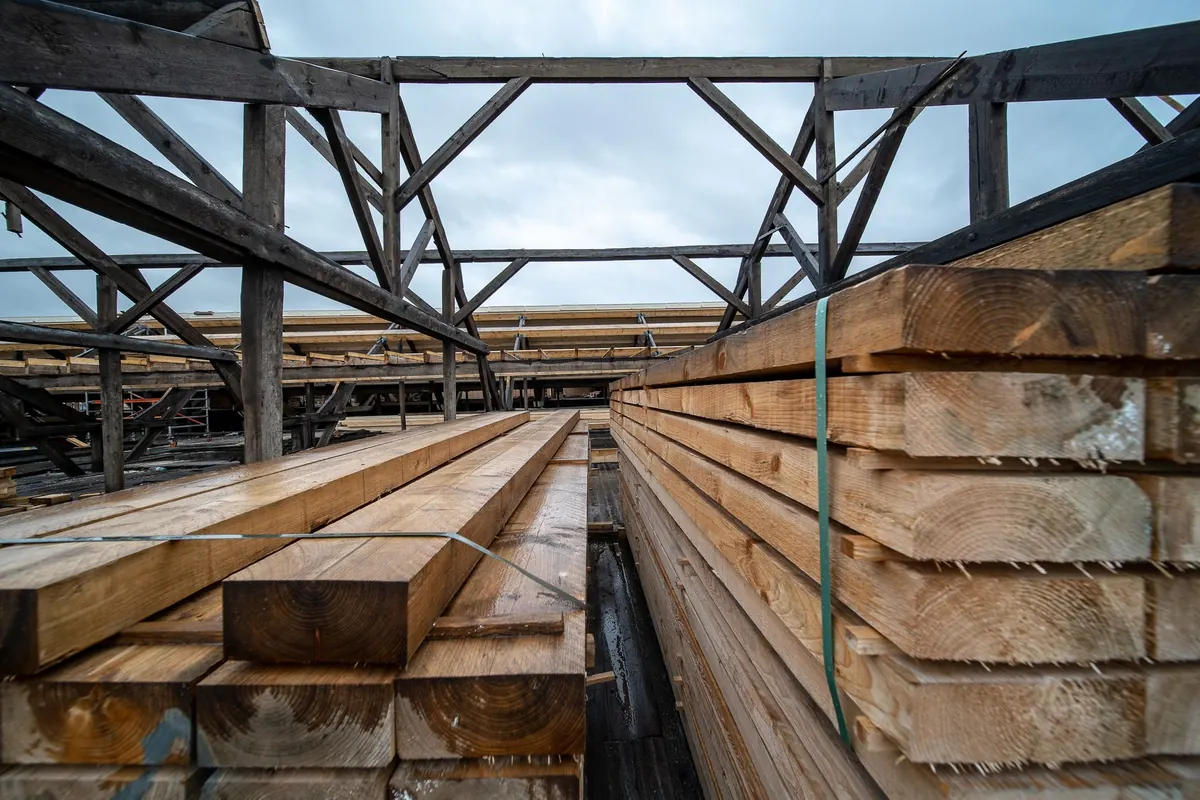
Acclimatise larch before you cut it. Bring it into the workshop or the room where it will live for several days. Store it flat, off the ground, with spacers between boards so air can circulate. On site, stack cladding with spacers and cover it loosely. When fixing, use slotted holes, clips or elongated pilot holes to let the timber move. For furniture, use floating panels, breadboard ends or figure-eight fasteners. These details take a little more planning, but they prevent cracks and gaps later.
Getting It Right from the Start
Larch is a superb timber when you work with it rather than against it. The rules are straightforward: control the dust, use stainless fixings where they matter, keep tooling clean and sharp, let the timber dry before finishing, and design for movement. None of these steps is complicated, but skipping one usually shows up weeks later as a stain, a split or a peeling coat of finish.
Before you start, check your extraction, your fixings and your finish. Test on an offcut. Give the timber time to settle. If you are using larch in a structural application, or you are unsure about fixings for a coastal or high-exposure site, take advice from a supplier or a qualified trade professional. For health concerns around wood dust, speak to your GP or an occupational health adviser. A little preparation now will save you a lot of remedial work later.
Photo: Rudimaes / Pixabay