Larch has earned its place in British gardens for good reason. It is a softwood, but it behaves like something tougher: the heartwood resists rot far better than pine, it weathers to a soft silver-grey, and it holds its shape through wet winters and dry summers. That makes it a sensible choice for raised beds, especially if you want something that looks good without demanding constant attention. The catch is that a raised bed is a hard life for any timber. Soil stays damp, air movement is limited, and edible crops mean you cannot reach for the strongest preservatives. Get the details right, though, and a larch bed can give you many productive seasons.
Why larch suits UK raised beds
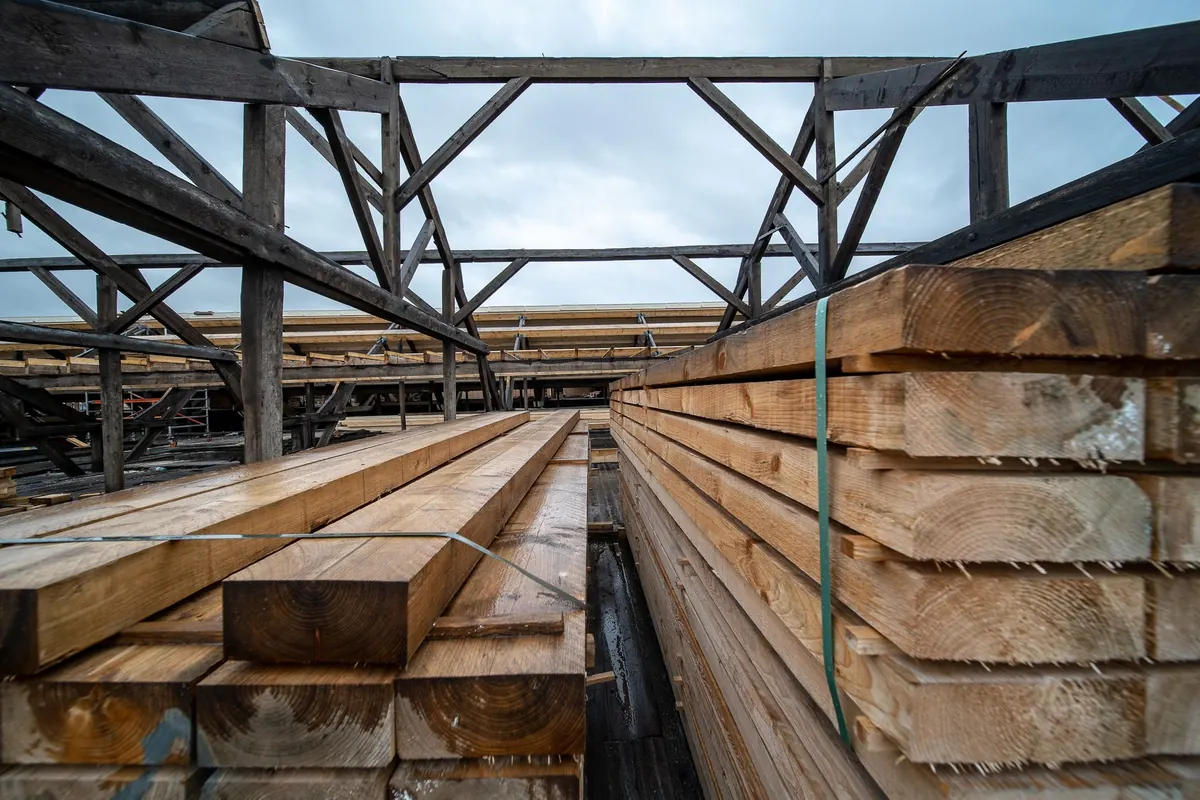
Larch is grown across Europe and Siberia, and most timber yards in the UK will stock boards described as European larch or Siberian larch. Siberian larch tends to be slower grown and denser, while European larch is more widely available. Both have good natural durability, particularly the darker heartwood. Unlike many softwoods, larch contains natural extractives that slow down fungal decay.
It is not indestructible. In direct, permanent contact with wet soil, even larch will eventually soften and rot. But used above ground, with decent drainage and a little airflow, it will outlast untreated pine by a wide margin. The UK climate is mild and damp rather than extreme, which is actually helpful: timber rarely dries out so violently that it splits, and larch copes well with repeated wetting and drying.
Choosing the right larch boards
Not all larch boards are equal. For a raised bed, you want substance and you want heartwood. Sapwood is paler, softer and much less durable, so ask your supplier to confirm what you are buying. If you can only get mixed boards, use the best pieces for the sides that will touch soil.
- Thickness: 32–45 mm is ideal. Thin boards may bow under the weight of wet soil; 45 mm is a wise choice for beds higher than 300 mm.
- Width: 150–200 mm boards are easy to handle and let you build in courses. Two 150 mm boards give a 300 mm deep bed, which suits most salads, herbs, onions and carrots.
- Heartwood: Choose boards with a rich, darker colour and tight grain. Avoid large areas of creamy sapwood.
- Condition: Look for straight boards with small, tight knots. Reject anything with long splits, soft patches or signs of active woodworm.
- Fixings: Use stainless steel screws or coated exterior screws. Galvanised screws can work, but stainless steel avoids rust stains and lasts longer in damp soil.
If you are building a long bed, add a central post or brace to stop the sides bowing outward. A 2.4 m bed filled with wet soil exerts real pressure, and a simple corner post plus one midpoint support makes a noticeable difference.
Treating and lining larch for edible crops
The safest approach for a food-growing bed is to use untreated larch on the inside and accept that it will weather. Larch does not need a chemical crutch to give you a reasonable lifespan. If you do want to treat it, choose a water-based, solvent-free wood preservative that is labelled as suitable for planters or edible gardens. Follow the manufacturer’s instructions exactly, and let it cure fully before filling the bed.
Never use creosote, old engine oil, or mystery treatments from a shed. Avoid reclaimed timber of unknown origin, especially old railway sleepers, telegraph poles and painted boards that may carry lead or other contaminants. Those are fine for ornamental projects, but not for beds growing lettuce and strawberries.
Lining is useful, but use the right material. A non-woven geotextile membrane lets water pass through while keeping soil out of the gaps between boards. That reduces direct soil contact and slows rot at the joints. Do not line the sides with solid plastic sheeting unless you have designed proper drainage; it can trap moisture against the timber and create a soggy, airless root zone. If you are unsure whether a treatment is safe for edibles, do not use it. Ask the supplier or a qualified horticultural adviser before you fill the bed.
Getting drainage right
Poor drainage is the most common reason raised beds fail, and it is almost always avoidable. The old advice about filling the base with gravel is outdated. A gravel layer does not improve drainage in a raised bed; it can create a perched water table that keeps the soil above it too wet. Instead, work with the ground beneath.
- Fork over the subsoil at the base of the bed to break up compaction.
- Add a layer of cardboard to suppress weeds. Overlap the edges well and soak it.
- If the bed sits on paving, raise it on pressure-treated battens or feet so water can escape and air can move underneath.
- Fill with a mix of topsoil and well-rotted compost. Roughly 60:40 is a good starting point for most vegetables.
- Leave the soil about 50 mm below the top edge so mulch and water do not spill over.
- Water gently after filling to settle the soil, then top up if needed.
In very wet UK winters, a bed on heavy clay may still sit wet. If that happens, consider a shallow French drain beside the bed or grow in a taller bed with a more open soil mix. Larch tolerates damp conditions, but it lasts longer when water drains away rather than pooling against the boards.
Are larch beds safe for edible crops?
Larch timber itself is not a concern for growing food. The risks come from treatments, finishes and reclaimed sources. If you use untreated larch, or a preservative explicitly labelled as safe for edible gardens, you are on solid ground. Modern pressure-treated timber should only be used if the label states it is suitable for raised beds or planters. If it does not say that, keep it for ornamental use.
Some gardeners line treated beds with a membrane to reduce contact between soil and timber. That can help, but it does not make an unsuitable treatment safe. Roots and soil life are persistent, and water movement can carry compounds into the growing mix. The simple rule is: if you would not want it in your compost, do not put it around your carrots.
Maintenance that adds years
Once planted, a larch bed needs very little. Check the fixings each spring and tighten any screws that have worked loose. Replace a bowed or split board before it puts strain on its neighbours. Top up the soil with compost each year, and avoid piling soil permanently against the outside of the boards. If the boards start to look dry, a coat of plant-safe oil or preservative on the outside only can help, but keep it away from the soil side.
A simple larch raised bed recipe
For a bed 2.4 m long, 1.2 m wide and 300 mm deep, you will need four boards at 2.4 m and four at 1.2 m, all around 45 x 150 mm, plus four corner posts of 75 x 75 mm cut to about 350 mm. Set the posts, screw the boards in two courses, line the inside with non-woven geotextile, and fill with a topsoil and compost mix. Site it where it gets good light, keep it within reach from both sides, and start with crops you actually eat. A well-built larch bed is not just a structure; it is a small, productive piece of ground that should serve you for years.
Photo: Damian Apanasowicz / Pexels